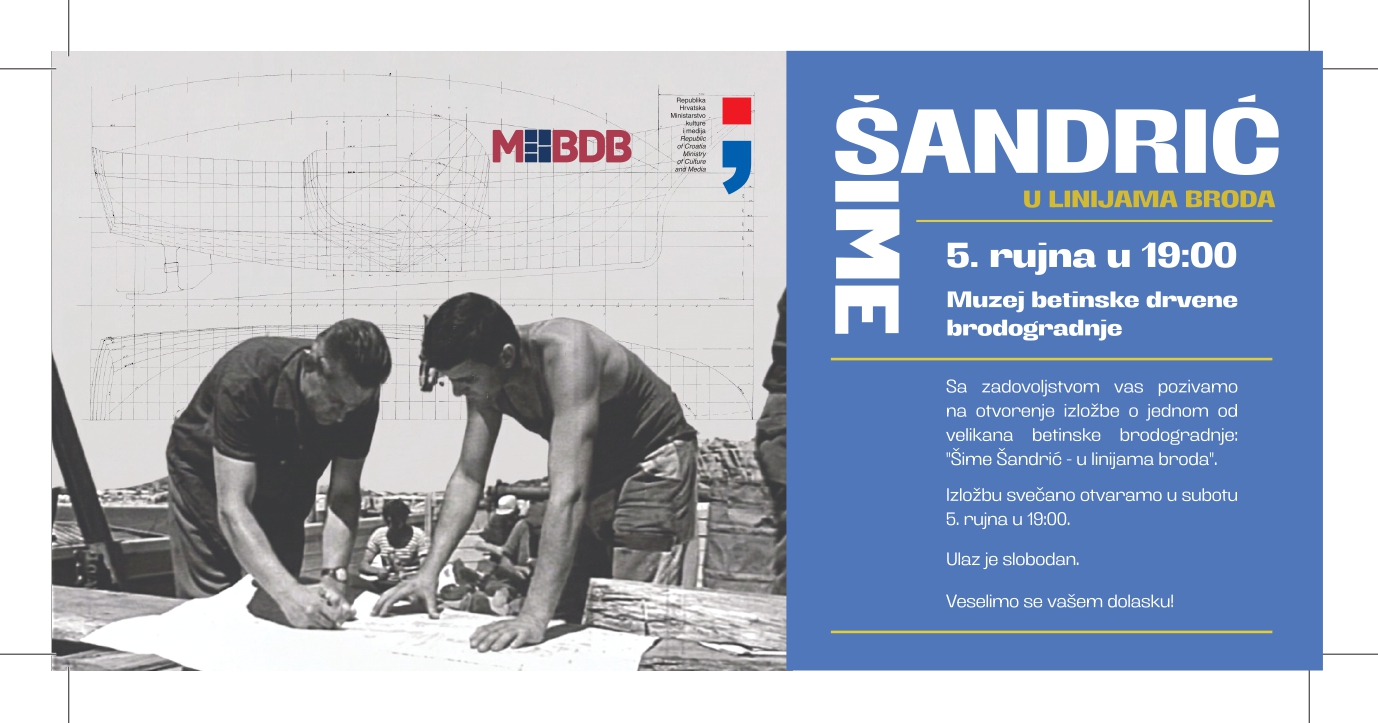
The Museum of Betina Wooden Shipbuilding presents the exhibition “Šime Šandrić – Through the Lines of Boats”, dedicated to one of Betina’s most prominent 20th-century boatbuilders, a master craftsman whose work connected traditional boatbuilding knowledge with technical design and the modern development of small wooden vessels.
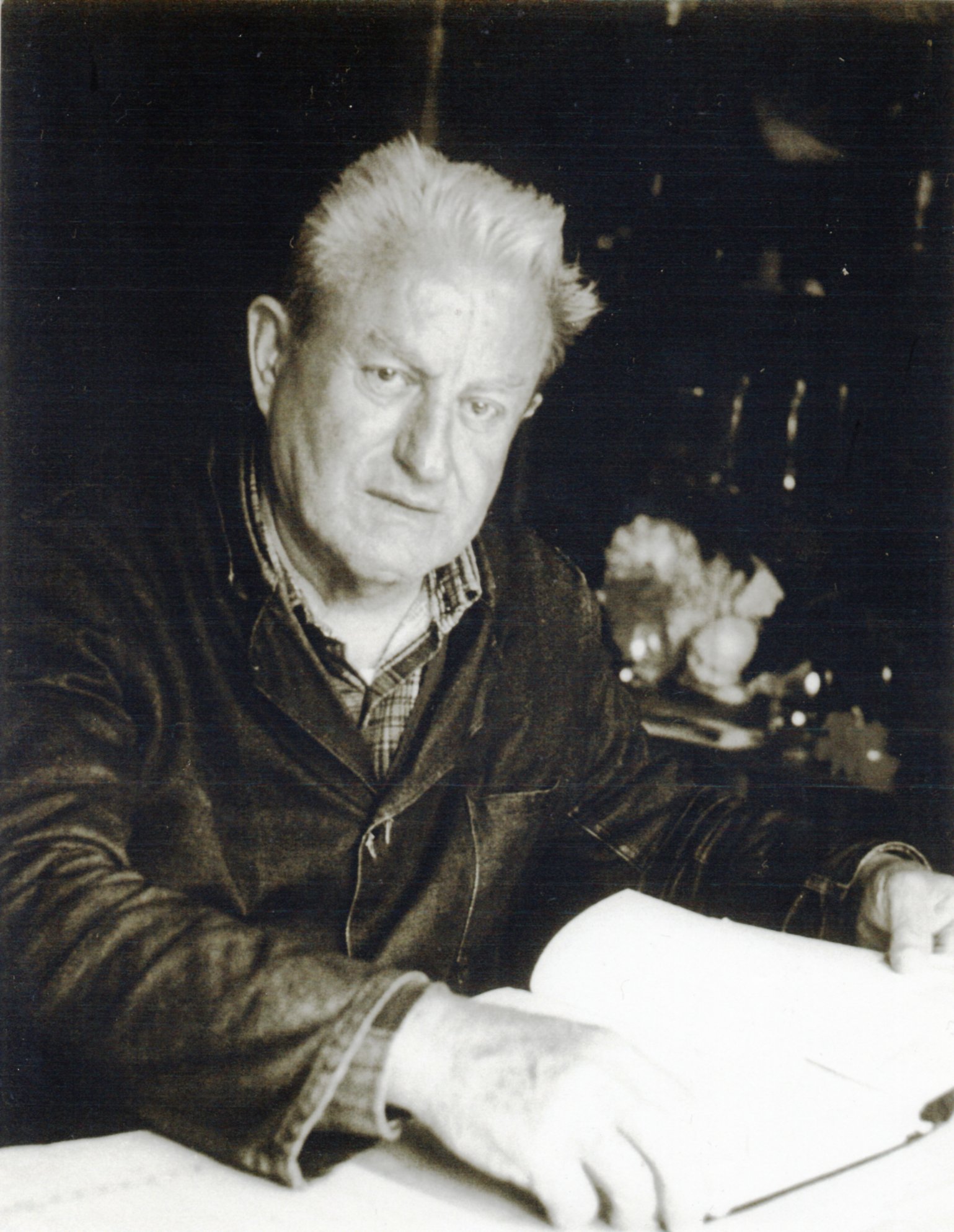
Šime Šandrić (1922–2014) learned the boatbuilding craft in the family boatyard of his grandfather Benjamin and his uncle Ljubo Uroda. His professional path led him from building traditional wooden boats characteristic of the Adriatic islands and coastal areas to designing fishing boats, sailing yachts, tourist vessels and large wooden sailing ships. During his decades of work at Betina Shipyard, and later as an independent designer, he participated in the realization of numerous projects for both domestic and international clients.
The exhibition places particular emphasis on Šandrić’s work as a boat designer. Preserved drawings, technical documentation, contracts, handwritten notes, photographs and other archival materials reveal the exceptional precision of his work, while also vividly illustrating how traditional boatbuilding in the second half of the 20th century adapted to new technologies, regulations and the changing needs of clients.
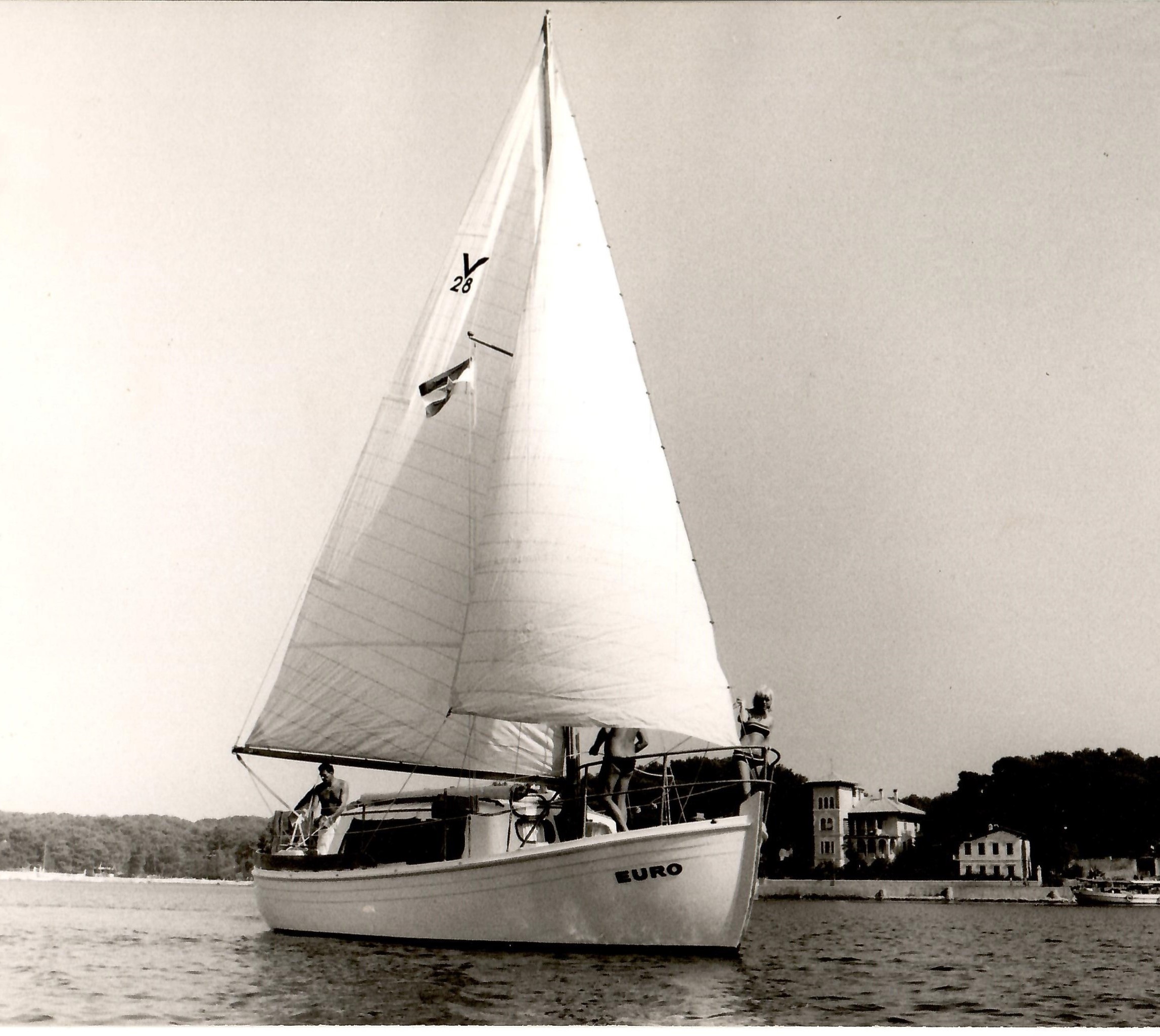
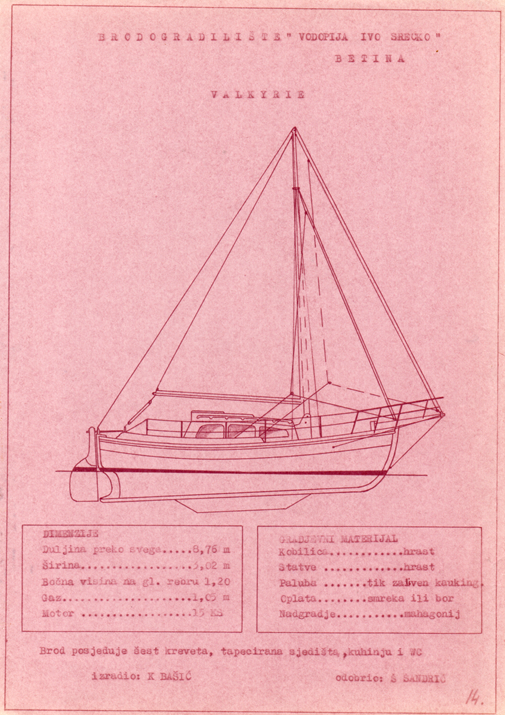
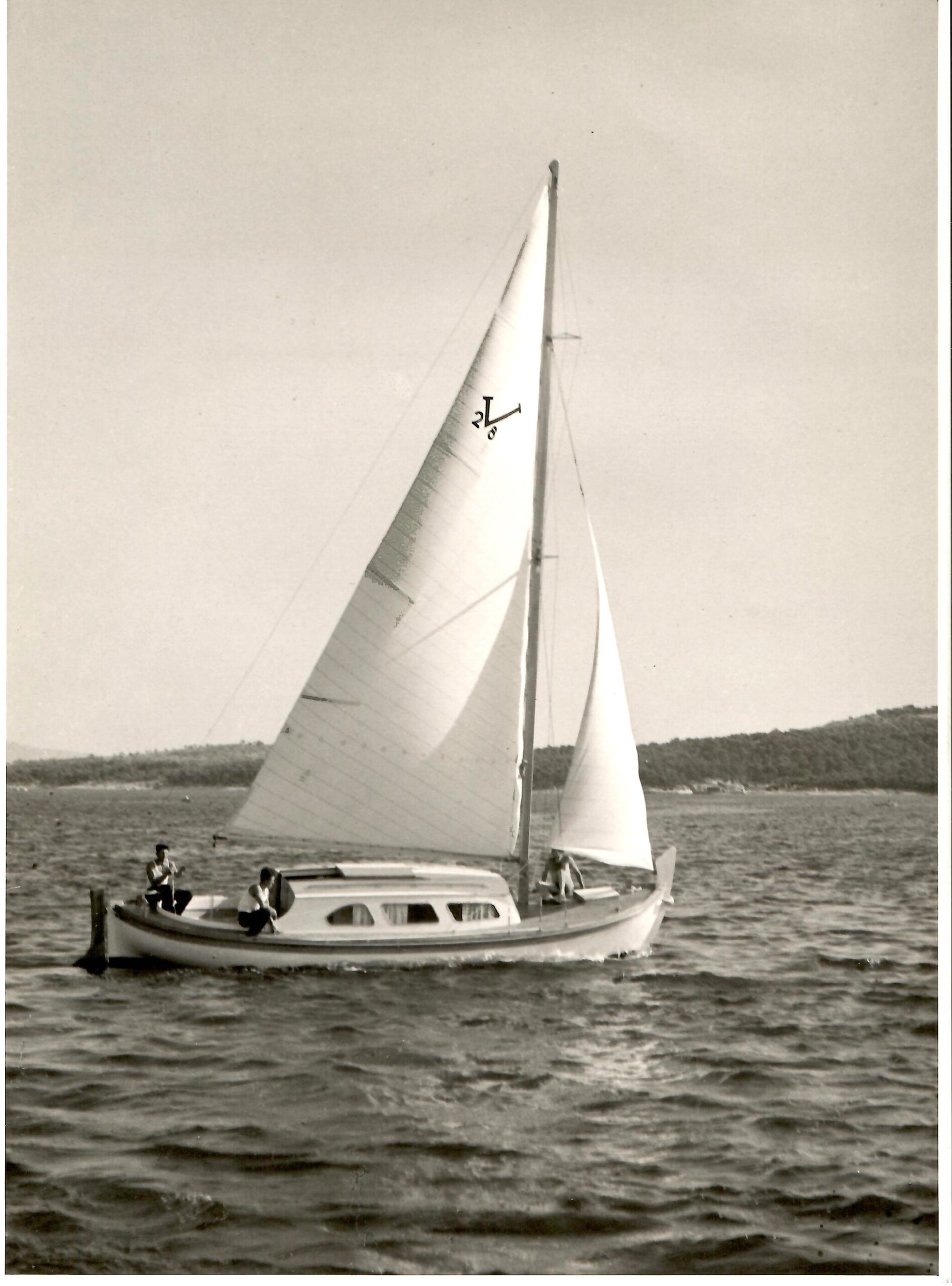
From fishing boats and sailing yachts to projects that connected Betina’s boatbuilding tradition with the United States, North African countries and the European market, Šime Šandrić’s work as a boatbuilder and designer bears witness to a period of significant development and modernization in Betina’s shipbuilding industry. A special place in his work is held by the Viking and Valkerye sailing yachts, which were presented at international nautical fairs on several occasions, as well as the large wooden vessels designed during the later period of his career.
The exhibition is based on extensive documentary material, recorded testimonies by Šime Šandrić, interviews with members of his family and associates, as well as a valuable collection of drawings and technical documentation made available for the research and exhibition by his son, Vilije Šandrić.
Through the story of Šime Šandrić’s life and work, the exhibition also explores a much broader dimension – the development of Betina’s wooden shipbuilding tradition, the transmission of knowledge between generations, and the ability of a traditional craft to change, adapt and survive despite different challenges.
Šime Šandrić belonged to a generation of Betina boatbuilders who learned the craft where it had been taught for centuries – in the škver, alongside experienced masters, timber, traditional tools and boats under construction. Yet his professional path would take him much further. From a boy who acquired his first boatbuilding skills in the workshop of the renowned Uroda boatbuilding family, he became one of the masters who shaped the development of Betina’s wooden shipbuilding industry in the second half of the 20th century.
The new exhibition “Šime Šandrić – Through the Lines of Boats” follows precisely this journey.
Born in Betina in 1922, Šime grew up in a family deeply connected to boatbuilding. After completing his education, he began his apprenticeship under his grandfather Benjamin Uroda, working alongside his uncle Ljubo Uroda and his older brother Nikola. Šime took part in the everyday work of building wooden boats. The boatyard primarily built gajetas, between 5.5 and 7 metres in length, and leuti, approximately 7.5 metres long, which were the most suitable vessels for the needs of the inhabitants of the Šibenik and Zadar areas.
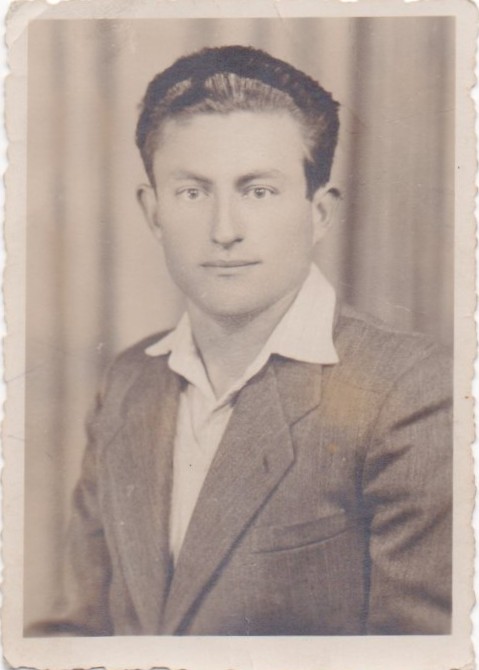
Šime Šandrić, early years

Nikola Šandrić, brother
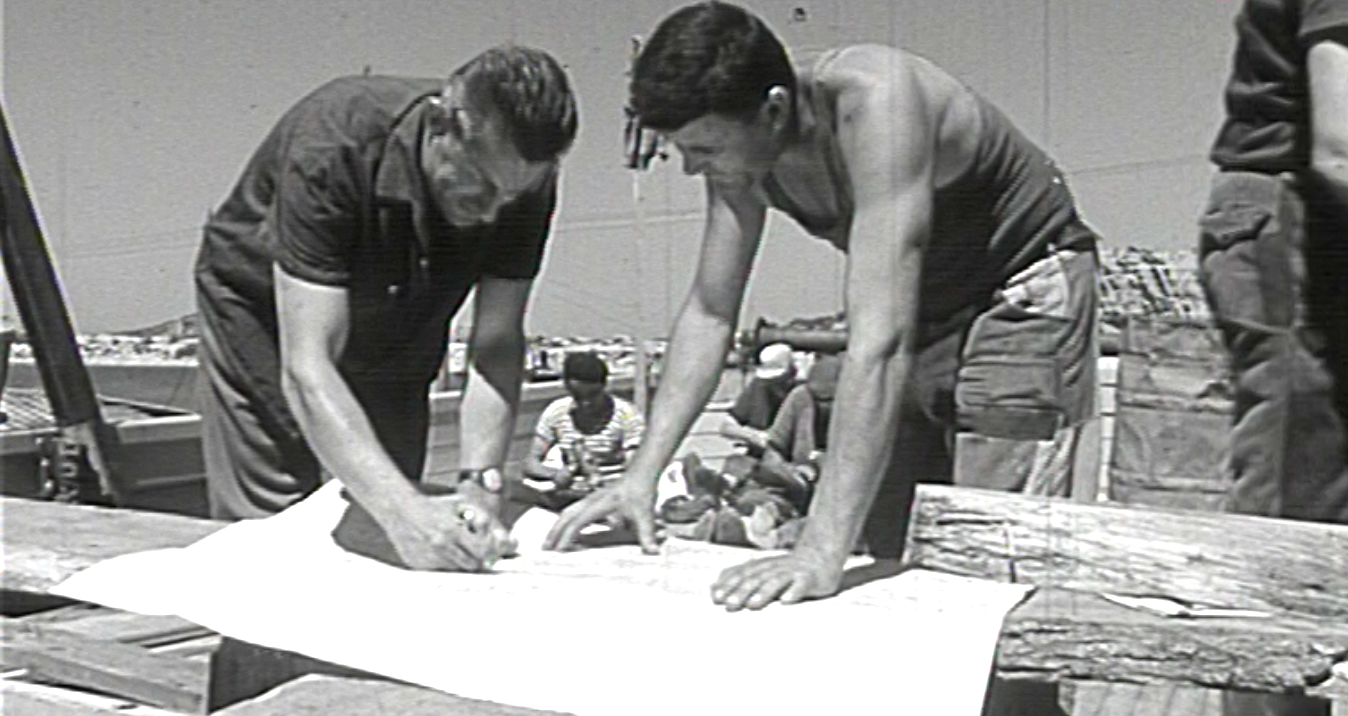
One of the key turning points in Šandrić’s professional development came when he went to work in Martinšćica near Rijeka, where he gained more systematic experience in technical drawing, taking off boat lines and preparing design documentation. The traditional knowledge he had acquired in the family boatyard thus began to merge with the technical skills that would define his later work.
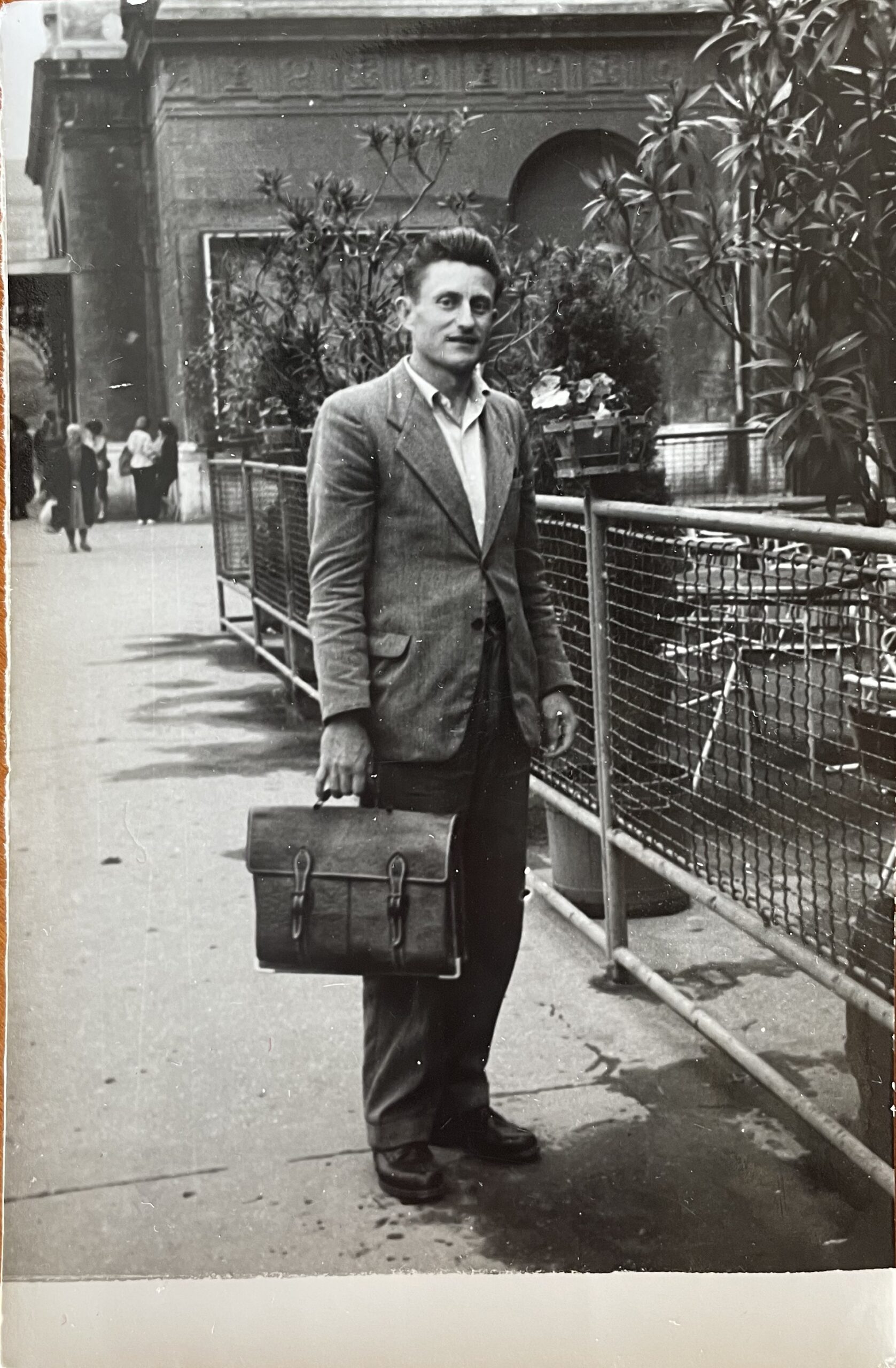
Upon returning to Betina, he became involved in the development of sailing within the newly established Narodna tehnika, before returning to the Betina Shipyard. In 1956, he became a foreman in new vessel construction, and from 1963 until his retirement in 1981, he served as technical manager of Betina Shipyard.
The ability to translate a master craftsman’s experience into a technical drawing is one of the most fascinating aspects of Šandrić’s work. He drew boat lines, construction plans, frame lines, construction templates and general arrangement plans. The drawing did not replace the knowledge acquired in the boatyard – it was its continuation, a way of transforming everything a boatbuilder knew about wood, proportions, the sea and a vessel’s behaviour into precise technical documentation.
Over the following decades, Šime Šandrić participated in the design and construction of a wide variety of vessels: from gajetas, pasaras and leuti to fishing boats, sports and family sailing yachts, tugboats, tourist vessels and large wooden sailing ships. His work had by then extended well beyond the local context. During his tenure as technical manager at Betina Shipyard, projects were carried out for clients from different parts of the Adriatic, as well as from the United States, Algeria, Tunisia and Syria.
The Viking and Valkerye sailing yachts were presented at European nautical fairs, and approximately 40 examples of these two vessel types found owners outside the former country. Owners of these sailing yachts still communicate with one another today, exchanging information about their boats and their builders, drawings and lines.
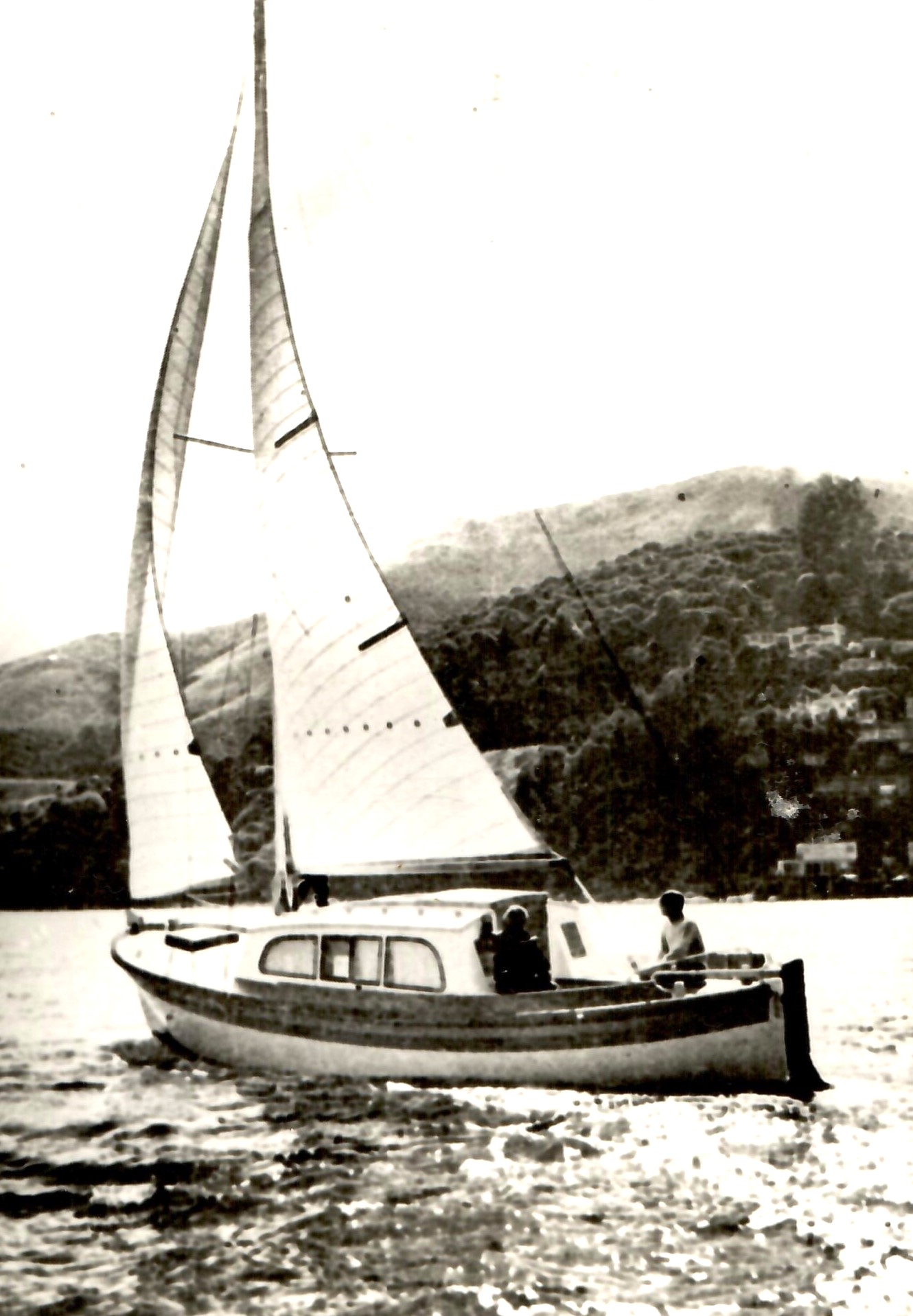
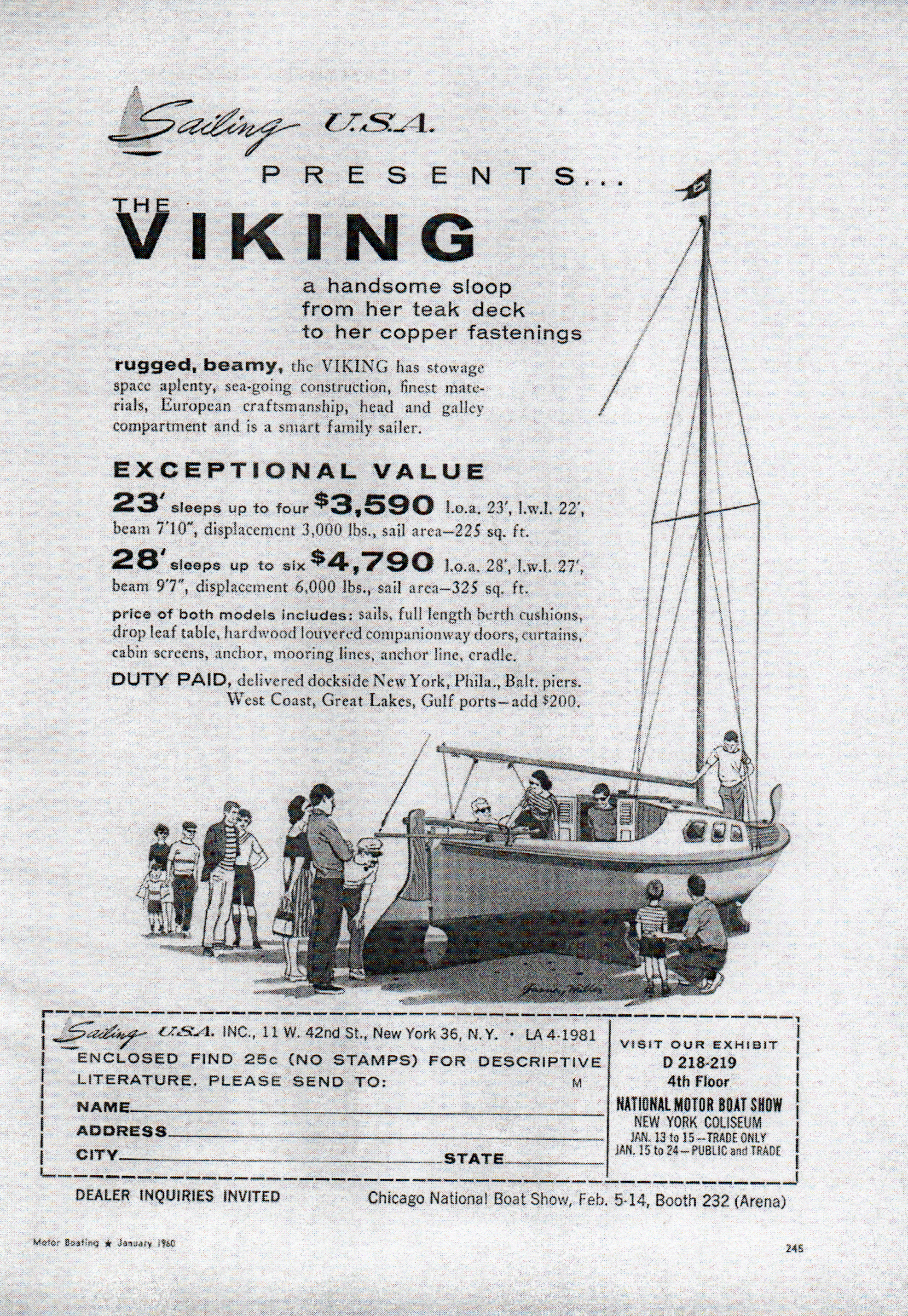
Šandrić’s lifetime almost symbolically encompasses a major period of transformation. He began in a family boatyard where knowledge was passed directly from master to apprentice, and his professional career matured at a time when boatbuilding increasingly required technical documentation, design precision, new materials, motorization and compliance with modern regulations.
It could therefore be said that the story of Šime Šandrić is not merely the biography of a boatbuilder. Through his work, we can follow the evolution of Betina’s boatbuilding tradition itself – from a family-oriented activity to an organized shipyard undertaking demanding projects for domestic and international markets. At the same time, we can see what remained unchanged: a fundamental understanding of the boat and the material.
The drawings that form the foundation of this exhibition preserve the boatbuilder’s way of thinking and record the process through which an idea was transformed into a boat. Šime Šandrić left behind boats that are still sailing, drawings from which vessels were built, and knowledge that he shared with generations of boatbuilders.
With the exhibition “Šime Šandrić – Through the Lines of Boats”, we have sought to bring together part of this extensive body of work and tell the story of a man whose professional journey can be read through the history of Betina’s boatbuilding tradition in the 20th century.
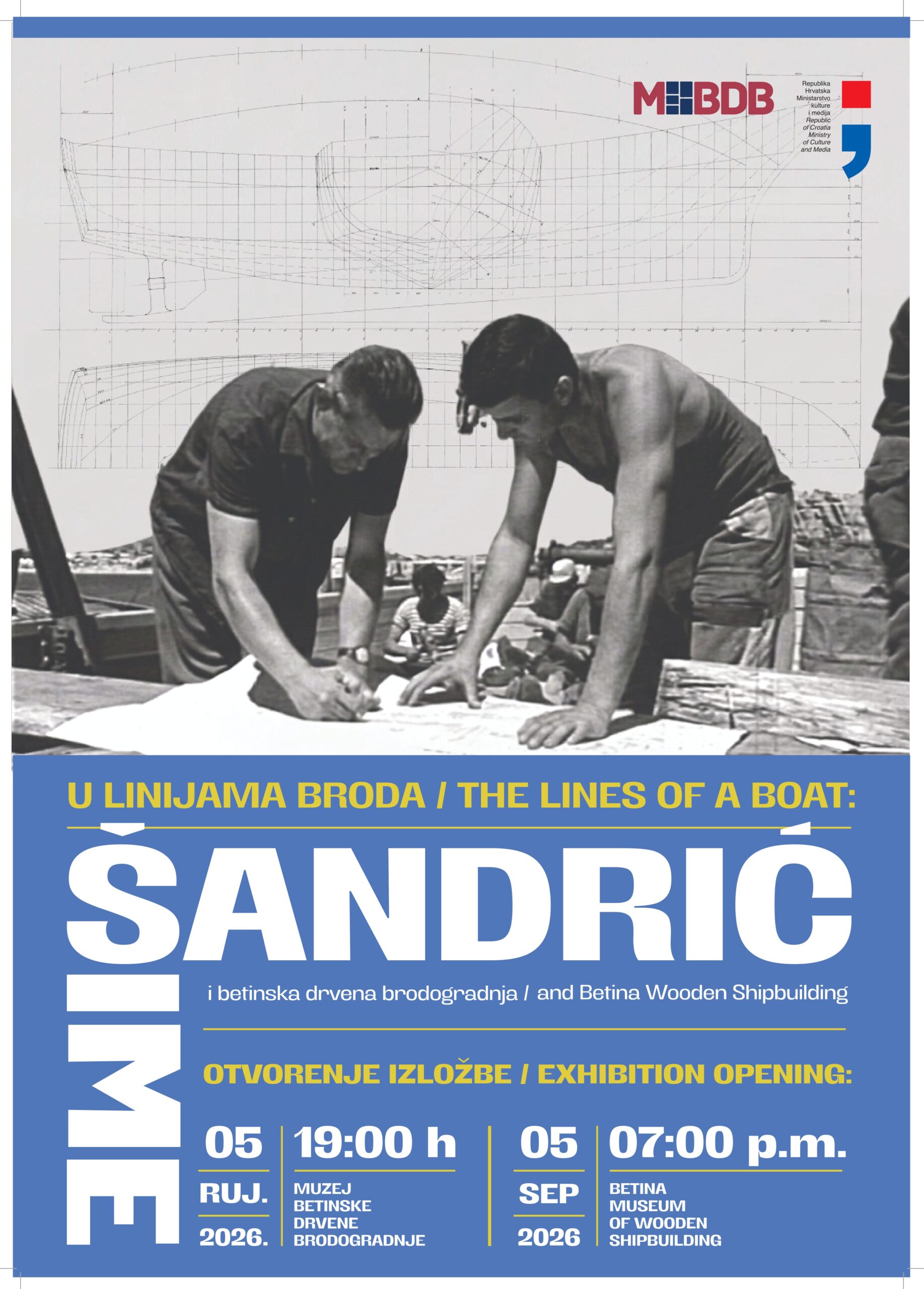
The exhibition opens on 5 September at 7:00 p.m. See you at the Museum!